Saturday, 31 August 2024

Chase: The Complete Trilogy by Thomas Dellenbusch


"He wanted to battle criminals, but not to become one himself. Killing was never a part of the plan during these operations".

Chase: The Complete Trilogy by Thomas Dellenbusch is an entertaining and gripping story of suspence. There are lots of twists and turns to keep the reader guessing. 

Blurb:

Chase, the famous detective agency in Hamburg, is faced with three extremely tricky cases. Solving the intricate mysteries is one thing, the dangers involved are another. Chief investigator Rique Allmers and his team are always up against powerful and unscrupulous opponents.

In "The Hunt for the Mute Poetess", they set out to uncover the family secret of a deaf-mute author, which is closely guarded by the Hamburg mafia.

In "The Hunt for a King", the two Chase agents Jerome and Chen Lu travel to Scotland to solve the murder of a history professor. Without knowing it, they fight to preserve one of the greatest legends of mankind.

In "The Hunt for the Tsar's Treasure!, Andree, Chase's IT specialist, after his girlfriend is kindnapped, suddenly finds himself in a trace to find what is probably the most valuable lost treasure in the world.


This series introduces us to the concept of KopfKino.

"KopfKino (a German term for Theatre of the Mind) means relaxing, thought-provoking and enthralling movie-length stories. With an approximate reading time of between 60 and 180 minutes".

All books are published as movie-length instalments.


Chase: The Hunt for the Mute Poetess is the first book in the trilogy.

The plot of the first story shows the dark side of the organised crime empire with its evil ganglords. This grim network, enforced by fear, is involved in the vicious murders, exploitation, human trafficking, ruthless violence. Dramatic events of the past have repercussions that stretch their ugly tentacles into the present.

We're plunged into an action scene from the first page. A young barefoot woman collides into Rique Allmers, the private detective, as he walks in the city centre. She looks terrified, and no surprise, as she is chased by a couple of dangerous thugs. Rique helps the woman escape her pursuers, but the hunt is not over. The adversary - the Hamburg mob - is lethal and ruthless.

Katja Krömer has no idea why she is being hunted by the gangsters. To rescue her, Rique's team has to solve the clues and find the answers in Katja's mother's past.

While the series is named Chase after the agency, there is plenty of chasing in all books, so it's an apt title from both points of view.

Rique Allmers is the head of the enterprise named Chase. "His services, which were commissioned by corporations, celebrities and wealthy citizens, included property- and personal-security, surveillance, extortion-, missing-persons- and industrial-espionage investigations, and much more. The government also engaged Rique's services for covert operations..."

The group consists of a varied group of specialists, from those skilled in close-combat techniques to computer and technology whizzes.

As the plot unfolds, we meet different members of the group, and begin to appreciate their talents.


In "The Hunt for a King" the action moves to Scotland. The pace, suspence and intrigue are expertly handled. 

A professor of history dies in suspicious circumstances. Police declare it to be an accident caused by a drink-drive. The problem is - the well-respected professor didn't drink. Who has killed Ronald Campbell and why? Professor's sons are in danger too. Two agents from Chase, Jerome and Chen Lu, arrive to Scotland to help work out the mystery.

I found this part of the trilogy most exciting, as it turns to be a creative and imaginative interpretation of Arthurian legends. 


In The Hunt for Tsar's Treasure we follow Andree, the IT specialist from Chase, as he tries to rescue his girlfriend Manuela, who's been kidnapped. Finding and freeing Manuela becomes his priority, but to save her, the team needs to decode a series of puzzles, with clues hidden in riddles and artifcats.

This story sets the team looking for the priceless treasures, which were lost during the WWII. 

It's a smart, corkscrew plot, with interesting forays into the historical past.

The main characters of the series are not super-humans, we see them making mistakes, not paying enough attention, or not being physically fit to escape the criminals.


KopfKino has proved to be a promising concept. 

Pros: You can easily read each instalment during a train or plane journey, or whenever you find some free time to yourself. 

Action-packed, these stories are rather visual and suspensful. 

Cons: Due to the format, there is no in-depth character development, or backstory. I would have liked to know more of the background of Rique, Katja etc, to find out how the agency was born.


This gripping read would make a great TV series.

If you enjoy a mix of action/mystery/conspiracy/thriller, Chase will take you on a rollicking adventure.


Many thanks to Thomas Dellenbusch for my free copy of the e-book!


kopfkino

About the author:

Thomas Dellenbusch was born in Düsseldorf, Germany in 1964, and still lives there. The former police detective and advertising copywriter has been actively writing for more than twenty years on a wide variety of topics. 

Although the lion's share of his assignments originate from the advertising industry, he has also put his talents to use producing speeches for government officials, poetry for individuals, screenplays, rulebooks, newspaper articles, sketches and much more. In short, any subject that can be communicated in a stimulating manner. 

Since 2013, he has specialised in the production of movie-length stories - written both by himself and seven other authors via the publishing company he founded expressely for that purpose.


Friday, 23 August 2024

A Voice in the Darkness (The Sundering Chronicles Book 2) by Mark Iles

sci fi fiction set in the future


"All wars leave scars. Not just the physical but the mental. The memory of watching friends die when there was nothing at all you could do about it."

"He was death incarnate. A nightmare once seen never forgotten. The sight of him was enough to send witnesses into screaming fits and nightmares for the rest of their lives".


A Voice in the Darkness (The Sundering Chronicles Book 2) by Mark Iles is a gripping sci fi/fantasy action-packed thriller with lots of twists and turns you won't see coming.

This sequel to Gardens of Earth was worth waiting for. It expands on the concepts from the previous novel. If you haven't read the first book, I'd suggest starting with it, and you will be hooked.


Blurb:

When children on the colony of Semillion go missing, they return changed, the parents even claim they are not their offspring. Sheriff Andrews soon finds himself investiagating the bizarre situation. what he discovers, leads to him being recalled by the military and sent back to Earth, a place now quarantined and where colonical humans are forbidden to venture.

The intention is to recruit ex-commando Seethan Bodell, who's living with the survivors of The Sundering and the mythological creatures that now inhabit the world.

Earth is still ruled with an iron fist by the alien Spooks, but there is something else going on behind the scenes, a new and deadly threat.

To succeed, Andrews and Bodell need to call on that grand tapestry of inhabitants: the shapeshifters, elves, the ravening pack of werewolves that Seethan now belongs to, and even the dead; in the hope that it will be enough to prevent an escalating situation that could so easily lead to war.


Sheriff Andrews lives among the colonists of the green planet Semillion, enjoying the relative peace and quiet, and pondering about his recent past. It was he who'd agreed the peace accord with the alien Spooks. The interstellar conflict had ended, yet the Admiralty decided he should take responsibility for the disaster, even if the dramatic chain of events had been utterly outside his control.

Semillion appears peaceful, "the forests flush with life and filled with bird song, air fragrant with the scent of flowers, loud and soft calls of unknown creatures, and the heady welcoming embrace of nature all around him. If Eden had ever existed it had to be like this".

However, this Eden has problems of its own.

Andrews is tasked with solving the mystery of the missing children. Some of them disappear for a while only to re-appear without remembering anything about what might have happened to them.

When daughter of the local widow goes missing, her mother is distraught. Andrews and his Deputy begin the investigation, following the possible clues, only to discover that the dreadful disappearances are just an indication of a much bigger problem, going beyond the Semillion's colonists.

There are "strange things going on out there in the forest".  As his Deputy says, "The shadows in these woods suck the life right out of you, Sheriff. It's an ominous feeling, like being watched all the time by God knows what. Go on, tell me you don't feel it. Everyone does".

To find the answers to their problems, Andrews has to go back to Earth. He has no choice. The trip could well end in a disaster, as the alien Spooks who rule the planet refuse to grant access to Earth to any colonial humans.

The surviving humans live in primitive conditions, without modern technology. What's more, the creatures of myths and legends now inhabit the same space as the humans.

Andrews hopes to find ex-commando Seethan Bodell and recruit him in the dangerous mission. Yet Bodell has undergone a huge change, having become a werewolf. "Seethan wasn't your average werewolf. He was a war veteran. A man who cared. Someone who'd learned to use his PTSD strategies to temper his murderous and manic lycanthrope urges, tools to keep the darkness away".

To succeed in their mission, Andrews and Seethan have to work out their differences. In fact, there is a lot in common between two war veterans. They also need to challenge their own fears and wipe away the preconceptions. 

To confront the embodiment of the interstellar evil, all the diverse groups inhabiting the Earth, have to unite and fight together: humans, elves, werewolves and shapeshifters, and even the dead. 


The first book was a thrilling mix of dystopian sci fi, fantasy, horror and high-octane action. While all these elements are still present in the second book, it leans heavier on the fantasy side. Plus there is a strong philosophical undertone, with the insights into PTSD, its effects and methods to cope with it. 

This dark tale raises deep philosophical questions about the survival of human species, futuristic technology, the devastating effects of colonialism and unchecked exploitation, and many others.

Though set in the future, the book is a commentary on the present state of humankind. 

The story pulls you in and refuses to let you go. The shocker of an ending hints at the next book in the series, and I'm hoping it won't take too long for the Book 3, as I really want to know how certain plotlines will develop. Highly recommended. 


About Mark Iles:

Born and raised in Slough, Mark Iles began studying the martial arts when he was 14 and joined the Royal Navy at the age of 17. A voracious reader he used to devour up to three paperbacks a day - primarily science fiction, fantasy and horror - by the likes of John Wyndham, Isaac Asimov, Arthur C. Clark, Ray Bradbury, Brian Lumley, Frank Herbert, Stephen King, and a plethora of others.

After The Falklands War Mark was drafted to Hong Kong, where he began writing features, for a variety of martial arts magazines, and short stories for a wide range of markets.

In 2012 he decided to challenge himself and undertook an MA in Professional Writing, followed by Diplomas in Copywriting and Proofreading. With over 200 short stories and articles under his belt the book he wrote for his MA Project, A Pride of Lions was published by Solstice - followed by two other novels, a short story collection, and four novellas. His novel Gardens of Earth, book I of The Sundering Chronicles, was published by Elsewhen Press in 2021.

A Voice in the Darkness is the second in the series. Now a 9th Degree Black Belt in Taekwondo, Mark is still involved in martial arts and has also written both a book and an app on the subject.


Sci fi fiction set in the future


Author's Social Links:


http://www.markiles.co.uk

http://www.amazon.co.uk/Mark-Iles/e/B004YZBP3I

http://www.twitter.com/welcometoearth

www.linkedin.com/in/mark-iles-82267a33

Mark Iles – Elsewhen Press


sci fi fiction set in the future


Tuesday, 13 August 2024

The Home Front Nurses by Rachel Brimble


fiction set during WWII

"...if nothing else, this war had taught her how important human beings were to one another. How everyone needed someone else to rely on, to trust."

"It was time to forget the past and concentrate on creating a different kind of drea. A different kind of future".


The Home Front Nurses by Rachel Brimble is a stirring tale of friendship and loyalty, trauma and challenges, fulfilment and inner strength.


This is a character-driven historical fiction with strong female protagonists. Rachel Brimble portrays the home front nurses and the challenges they face with compassion and sensitivity.


Blurb:

September 1941, Bath - three friends are about to find that some of the biggest battles are to be found on the home front...

As war rages and brave soldiers returning home from the frontline need nurses more than ever, fiercely proud redhead Sylvia Roberts is determined to help in any way she can. In spite of her mother's belief she isn't good enough, Sylvia believes that becoming a home front nurse is her calling.

Together with the two friends she makes on her first day in the job - Freda and Veronica - she knows she can help save lives. And, as the devastation of war shows no signs of ceasing, their work becomes even more vital.

Then Sylvia's life is thrown into the path of a man who might just be able to capture her heart. Even though he is somebody who everyone - except her best friends - seems prejudiced against. Can love really conquer all, in times of war?

One thing she knows is that - in the dangerous days that will follow - she and her friends will all need to support each other right to the end.


Sylvia, Freda and Veronica are newly qualified nurses, working in one of the hospitals in Bath. Their friendship is helping them through difficult times.

The nurses' personalities are quite different, what they have in common is their desire to help save lives.

Sylvia Roberts lives with her mother, who has told her countless times she would fail to become a nurse.

"Having stood firm and determined in her work and mind - not to mention remaining stalwart in the face of the daily physical strain - from today, she was a fully registered nurse. The world was her oyster..."

Sylvia is trying to prove to people that she is nothing like her brass mother who's got quite a reputation locally.

"I might not have been enough for certain people in my life, but I am good enough for Bath hospital and I'm determined to become one of the best nurses this city has ever seen".


Freda is trying to be "a good girl", while cherishing a dream of using her writing skills in the future. Her parents don't mind her being a nurse, as they think it is a good opportunity of finding a decent husband. 

Freda, however, has ideas of her own. "She could not waste her life adhering to her mother's well-meant but wholly domestic plans for her and Dorothy [younger sister]. She was made of tougher stuff than to serve and pander to a husband, see to a brood of kids and cook something - to quote her mother - "delectable" every night". While determined to do her job diligently, Freda knows that nursing is not for her, not by a log shot.


Veronica is the complete opposite of self-assertive Sylvia. She is shy and vulnerable, and is hiding a dark secret. Friendship with Sylvia and Freda helps her face her fears and believe in herself. "Sylvia's confidence and humour and Freda's quiet strength and kindness had begun to break down her self-imposed boundaries".


Three friends have to deal with their own personal issues. Sharing their secrets and hopes, they offer advice and support to each other. 

"It was time women took control of their lives and openly declared what was best for them once and for all in this stupid messed up world".


The Home Front Nurses will appeal to the fans of historical fiction, set during WWII. 

It is a gripping story, that transports you back in time. An unforgettable page-turner of love and hope, grief and resilience, drama and romance.


The book ends slightly abruptly, on a cliffhanger, and some of the plotlines will hopefully be explored further in the next instalments of the series.


Many thanks to Rachel Brimble, Boldwood Books and Rachel's Random Resources for my e-copy of the book!


firction set during WWII, Chez Maximka


Purchase Link - 
https://mybook.to/homefrontsocial


Chez Maximka, fiction set during WWII

Author Bio –

Rachel Brimble is the bestselling author of over thirty works of historical romance and saga fiction. The first book in her series, The Home Front Nurses, is set in Bath.


fiction set during WWII


Social Media Links –  


Facebook: @rachelbrimbleauthor

Twitter: @RachelBrimble

Instagram: @rachelbrimbleauthor

Newsletter Sign Up: https://bit.ly/RachelBrimbleNews


Friday, 26 July 2024

July Box Degustabox

 Degustabox is a monthly food and drink subscription box. It's an excellent way of discovering new products which have only just appeared in the shops, or those which have been around for a while, but you haven't had a chance to try them yet.

Thanks to Degustabox, I have found new favourites to add to our shopping list, including some products which I otherwise wouldn't have tried.

Each time a monthly box arrives, its contents are a total surprise. You get a good selection of foods and drinks.

If you haven't tried Degustabox subscription box yet, and would like to have a go, I have a £3off discount from your first box (and you can unsubscribe any time), just use code DKRLN when placing an order. 

What did we get in July Box Degustabox?


Chez Maximka, Degustabox food box


Let's begin with the Product of the Month:

Peppadew Mild Sweet Piquanté Peppers (£3.25) is a flavourful, versatile ingredient for a variety of recipes, from pasta dishes to salads, from an antipasti platter to pizza topping.

These bite-sized peppers have a sweet and tangy taste, and a crunchy crisp texture. They will enhance any cheese sandwich, whether is a spreadable soft cheese, or a crumbly Cheddar.

Each mini pepper is de-cored and could be stuffed with cream cheese.

Typical values: 78kcal and 17.1g of sugar per 100g drained product.

Available in all major supermarket chains.


Chez Maximka, Degustabox food box


Bio & Me Cocoa Hazelnut Bar/ or Flapjack Oat Bar Toffee Apple or Superberry (£1.50) is a tasty flapjack oat bar, with a right balance of flavour and texture.

High in fibre, all natural, it has no palm oil, no added sugar, and is gluten free and vegan friendly.

You should receive one item of three. We got the cocoa hazelnut bar. 

Nutritional values: 167kcal and 3.7g of protein per 38g bar.

Available at Waitrose, Sainsbury's (Free from aisle), Tesco (Free from aisle) and in bulk via the Bio&Me website.


Chez Maximka, Degustabox food box


Joyfull Millets Choco & Nut Crunchy Muesli (£4.20) is made with mighty millets ( a super grain) and is full of natural goodness. If you prefer chocolate-flavoured breakfasts, you are in for a treat.

It's a delicious combination of millets, jumbo oats, brown rice flakes, flax seeds, cranberries, sliced almonds and lightly coated in rich Choco.

I like adding a handful of similar muesli or granola to the oat cookie dough for extra flavour and texture.

Nutritional values: 162kcal and 7.9g of sugar per 45g serving; high in fibre and low in salt.

Available at Tesco.


Chez Maximka, Degustabox food box


Mahou 5 Estrellas (£2.50) is Madrid's favourite beer. 

Founded in Madrid in 1890, Mahou is the result of six generations of brewing tradition. Using the finest ingredients, it is a refreshing beer with a great taste. We shared a bottle, while having a pizza dinner, and it was spot on.

Typical values: Alc.4.8% vol.; 43kcal per 100ml.

Available at Sainsbury's and Morrisons.


Chez Maximka, Degustabox food box


Naked Natural Energy Red Apple, Raspberry & Goji Berry/ or Natural Energy Gold (£1.25) is a high caffeine lightly sparkling drink which reduces fatigue

Made with real fruit and infused with caffeine, this drink contains vitamins C & E, and no added sugar, no artificial flavours, sweeteners, colours.

Typical values: 35kcal per can; 80mg caffeine = espresso shot.

Available at WHSmith and other independent retailers.

You should receive 1 item in your box.


Chez Maximka, Degustabox food box


Moth: Aperitivo Spritz Bitter Orange Gin Fizz Soda Bliss 10% vol (£3.99, see above) is a cocktail in a tin, made with award-winning spirits.

Serve with ice and a slice of lemon or lime.

Vegan, contains sulphites, made with Tarquin's Cornish gin.

Available at all major supermarkets.


Nescafe Gold Blend 150g Paper Refill Pack (£5.99) is a fully recyclable paper refill pouch of instant coffee with its distinct rich aroma and smooth taste. 

This is 100% responsibly sourced coffee, supporting coffee farmers to improve their lands and livelihoods.

One pouch will make appr. 83 cups of coffee.

Available at Tesco.


Chez Maximka, Degustabox food box


Dr Will's Tomato Ketchup (£4.50) is a ketchup for more refined tastes. 

Made with ripened tomatoes and sweetened naturally with dates, this ketchup is bursting with flavour.

Whether you love your ketchup with chips, or burgers, as a pizza base or as a marinade, you will enjoy its distinct flavour.

Available at Waitrose, Co-Op, Ocado, Amazon and Dr Will's website.


Rubicon Spring Pink Grapefruit Blood Orange (£1.29) is a tasty soft drink.

This flavoured sparkling spring water is low in calories and full of flavour.

Available in all major supermarkets and independent convenience shops.


Chez Maximka, Degustabox food box


What is your favourite product in the latest Degustabox?

Wednesday, 24 July 2024

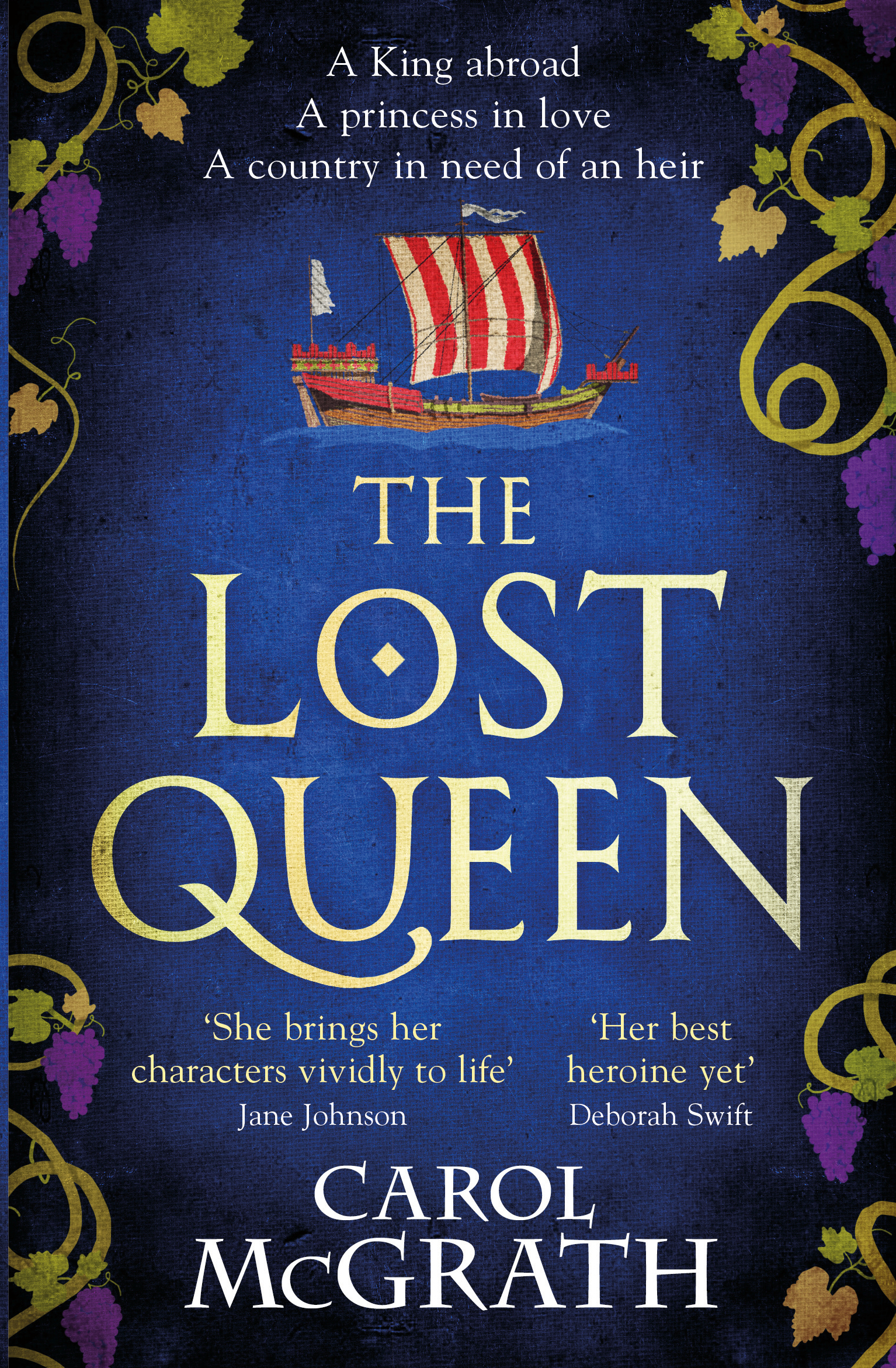
The Lost Queen by Carol McGrath (guest post)


historical fiction about Crusades

Today I'm thrilled to invite Carol McGrath to my blog. If you're interested in the history of fashion, you're in for a real treat.


The Lost Queen

1191 and the Third Crusade is underway . . .

It is 1191 and King Richard the Lionheart is on crusade to pitch battle against Saladin and liberate the city of Jerusalem and her lands. His mother, the formidable Eleanor of Aquitaine and his promised bride, Princess Berengaria of Navarre, make a perilous journey over the Alps in midwinter. They are to rendezvous with Richard in the Sicilian port of Messina.

There are hazards along the way - vicious assassins, marauding pirates, violent storms and a shipwreck. Berengaria is as feisty as her foes and, surviving it all, she and Richard marry in Cyprus. England needs an heir. But first, Richard and his Queen must return home . . .

The Lost Queen is a thrilling medieval story of high adventure, survival, friendship and the enduring love of a Queen for her King.


Acclaim for Carol McGrath's ROSE trilogy:
'Powerful, gripping and beautifully told' KATE FURNIVALL on The Silken Rose
'A tour de force of gripping writing, rich historical detail and complex, fascinating characters' NICOLA CORNICK on The Stone Rose
'A beautifully narrated novel' K J MAITLAND on The Damask Rose


historical fiction about Crusades


Purchase Link - https://tinyurl.com/5n8ab2xv


Author Bio – Following a first degree in English and History, Carol McGrath completed an MA in Creative Writing from The Seamus Heaney Centre, Queens University Belfast, followed by an MPhil in English from University of London. The Handfasted Wife, first in a trilogy about the royal women of 1066 was shortlisted for the RoNAS in 2014. The Swan-Daughter and The Betrothed Sister complete this highly acclaimed trilogy. Mistress Cromwell, a best-selling historical novel about Elizabeth Cromwell, wife of Henry VIII’s statesman, Thomas Cromwell, was republished by Headline in 2020. The Silken Rose, first in a medieval She-Wolf Queens Trilogy, featuring Ailenor of Provence, saw publication in April 2020. This was followed by The Damask Rose. The Stone Rose was published April 2022. Carol is writing Historical non-fiction as well as fiction. Sex and Sexuality in Tudor England was published in February 2022. The Stolen Crown 2023 and The Lost Queen will be published 18th July 2024. Carol lives in Oxfordshire, England and in Greece.

Find Carol on her website:

www.carolcmcgrath.co.uk.

Follow her on amazon @CarolMcGrath

https://twitter.com/carolmcgrath

https://www.pinterest.co.uk/carol0275/the-handfasted-wife/

https://scribbling-inthemargins.blogspot.com/

https://www.linkedin.com/in/carol-mcgrath-906723a/

https://www.facebook.com/CarolMcGrathAuthor1/


historical fiction about Crusades


And now Carol is talking about all things historical fashion-related. It's an absolutely fascinating topic. 


Fashion, fabrics and the Crusades


Crusaders brought home new fabrics and costumes from Outremer (the Holy Land) which inspired nobles dwelling in the west to desire similarly rich detailed clothing with complex tailoring and equivalent fine workmanship. This created a demand for eastern fabrics in Europe. Because clothing is perishable, it is difficult to know in great detail how the residents of Outremer dressed. Our information comes from textile and garment fragments, contemporary artistic depictions and literary descriptions. The styles were likely modifications of fashion set in Europe were made to accommodate weather and other conditions in the Holy Land.


An English lady in 1190 would wear a headdress, often hat-like and a veil, a waist belt and a woolen, silk or linen gown with a slight train. Noble women and men often wore embroidered leather gloves. Male tunics of the era were patterned with high collars and wide borders at the hem and they wore a long hip belt. Boots were short. Cloaks might be fur-lined and gowns patterned. Mantles were generally fastened at the front. Men favoured long hair and pointed beards.


history of fashion


Pilgrims traditionally wore wide-brimmed hats of straw, circular capes with hoods, two-tier tunics and footless hose. A Crusader wore a complete body suit of chain mail under a sleeveless body suit with heraldic decoration, sword and belt. The surcoat was a cloth garment worn over armour. Fighting in the sun wearing metal armour would have been an agony. We can see men in manuscripts, sculpture and seals.


history of fashion, crusaders


Women are depicted less frequently in Art relating to the Crusades. They are shown in Western conventional garb when they were. They did not go about completely veiled as did Muslim women. We know this because Muslim sources decry the lack of modesty displayed by Crusading women. European women most likely did wear veils over their faces when outside in order to protect their skin from the sun. They may have worn wide-brimmed hats to caste a protective shadow over their faces. They had clothing made in lighter fabrics. Many fabrics of Outremer were sheer, translucent or semi-transparent. Whilst their clothing was in European style these fabrics could have made European women appear provocative. If they were made from brocade, as during winter, their garments could be transformed into so something more luxurious and extravagant. Generally women adapted their conventional western styles to the climate of the Holy Land wearing looser garments and lighter fabrics.


Fabrics favoured in Outremer included silk, cotton, linen, felt wool and cloth woven from goat hair. These included a large number of hybrid fabrics composed of a warp of one kind of yarn and weft of another such as silk and wool, linen or cotton. Some of the finest cloth known to the medieval world originated in the Near East. For example, Egyptian cotton, linen and silk from Damascus were exported through parts of the Levant. Tyre was famous for white-silk and Beirut exported silk and cotton fabrics. Cotton was grown around Acre, Tiberias and Ramla. As for dyes, Crusader States were famous for saffron, turmeric and indigo. Mussels found only off the coast of Tyre provided a rich purple dye. These dyes were used widely and generously in Outremer creating much brighter colours than in the West. Block printing, embroidery, weaving with different colour threads were means of producing patterns for clothing decoration exported from Crusader States.

The vivid colours and fine fabrics must have made the inhabitants of Outremer appear exotic to visitors from the West. There was a proclivity for bathing and the use of sweet scents and perfumes and every day dress that in the West was saved for special occasions. I have aimed to include this sense of female life in Outremer into The Lost Queen. Berengaria and Richard wore fabulous wedding garments described in detail in contemporary source writings and again the clothing the women sourced in Jaffa.


history of fashion


Chez Maximka, historical fiction about Richard I


Tuesday, 16 July 2024

The Uncanny Gastronomic: Strange Tales of the Edible Weird (edited by Zara-Louise Stubbs)


Chez Maximka, supernatural tales


"Sweeter than honey from the rock,

Stronger than man-rejoicing wine,

Clearer than water flow'd that juice;

She never tasted such before,

How should it cloy with length of use?"

Goblin Market, Christina Rossetti


The Uncanny Gastronomic: Strange Tales of the Edible Weird (edited by Zara-Louise Stubbs) was published last year as part of the British Library Tales of the Weird series.

The introduction reads like a shortened version of the PhD, curious but slightly on the dry side.

"The uncanny gastronomic, at its core, literalizes the inherent weirdness of food, quering the many ways our appetites can begin to define our very sense of ourselves".


Blurb:

"A brush with the mushroom devil whets the appetite. The meat at the werewolf's table is a dish to relish. Dessert with London's cannibal club may be the cherry on top.

From fairy tales and folklore focused on magical foods and strange eating came an enduring tradition of writers playing with food and the uncanny. In the fiction of the nineteenth and twentieth centuries this tradition thrived, with themes of supernatural consumption, weird transformation and sensual euphoria as key ingredients.

Raiding this dark pantry of writing, this new collection presents a feast of sixteen classic tales, two poems and one essay, with choice morsels by masters of the macabre including Shirely Jackson, Franz Kafka, Angela Carter and Roald Dahl.


Each story and poem comes with a short introduction to the author (very informative and useful if you want to expand your to-read list).

The division of chapters into a menu while being amusing, is slightly artificial, i.e. done for the purposes of style rather than relevance. 


Contents

Introduction: an aperitif

An Appetizer: Human Horror

The Laboratory by Robert Browning is a typical example of the poet's style. This is a dramatic and pompous monologue of a woman who is plotting the demise of her lover's new love interest with a deadly poison. The formal structure of 12 quatrains juxtaposes with the dark, frenetic thoughts of the crazy lady.

Brilliant, if you enjoy this Victorian poetic genre, less so, if you find the dramatics tedious. 3/5


The Measure of My Powers by M.F.K Fisher (1919) is one of the essays collected in The Gastronomical Me. The author takes a trip down memory lane, talking about the cook named Ora, hired by the family during Fisher's childhood, the creative meals she cooked, and the older generation's antagonism towards her dishes. Grandmother who loves "plain good food" (including rather revolting sounding steamed soda crackers with hot milk) is having conniptions on seeing the spicy meals cooked by Ora, and feels justified when a terrible thing happens. 4/5


A Fasting Artist (aka A Hunger Artist) by Franz Kafka is a third-person narrative about a performing artist who starves himself while sitting in a cage for public display. He prides himself on fasting for weeks and living on water. Despite his fame, the artist is constantly dissatisfied, he feels belittled and wants to prove that he doesn't cheat. Over time, such performances go out of fashion, public loses interest, and the artist feels misunderstood. 

The overall theme is rather anti-gastronomic, and reads as an ironic criticism of the artistic airs and pretensions. 3/5


Like Mother Used to Make by Shirley Jackson is a slightly odd choice for this volume. If you expect a horror story in Shirley Jackson's style, you might be disappointed. There is nothing supernatural or eerie in the story. 

It's a rather mundane tale of an awkward Englishman who finds himself entertaining an unwanted guest, and he doesn't know how to extricate himself from the uncomfortable situation. Imagine younger Hugh Grant character. David is a fastidious, prim man who prides himself on keeping his little flat clean and well-organised. He is also very proud of his growing china and cutlery collection. Having invited his neighbour Marcia for dinner, he is forced to entertain an unwelcome guest of Marcia. 3/5


A Main Course: Supernatural Appetites

Goblin Market is a narrative poem by Christina Rossetti, telling the story of Laura and Lizzie who are tempted by goblin merchants offering them exotic fruit. Penniless Laura offers a lock of her hair as a payment, and gorges on the juicy fruit in a frenzy. She cannot hear the goblins any longer and pines for their forbidden fruit. As the time goes, Laura is getting feeble and affected with an unknown malady. Her sister Lizzie ventures in the dark, looking for the goblins and their dangerous offerings. She manages to save her sister by using her cunning. 

This classic poem has been interpreted and re-interpreted a hundred times, explaining the symbolism of the forbidden fruit, the allegories of female sexuality, temptation and redemption. 4/5


The Vampire Maid by Hume Nisbet is a classic tale of a young man who is looking for a remote place to stay, when he comes across an isolated cottage. 

"It was the exact kind of abode that I had been looking after for weeks, for I was in that condition of mind when absolute renunciation of society was a necessity. I had become diffident of myself, and wearied of my kind. A strange unrest was in my blood; a barren dearth in my brains. Familiar objects and faces had grown distasteful to me. I wanted to be alone".

A widow with a young ailing daughter Ariadne welcome him in their abode. The man is immediately smitten with the pale beauty of Ariadne. The accursed cottage proves to be more than the artist bargained for. While predictable (the title is obviously being the main spoiler), it is also very atmospheric. 4/5


Gabriel-Ernest is a 1909 short  story by Saki. It starts with a warning, "There is a wild beast in your woods..." The narrator meets a young werewolf in his woods, who preys on little children. The lycanthropy in this tale represents the symbol of adolescence. This Gothic horror reads as a parody of the genre, with a good dose of irony. 4/5


To Serve Man is a sci fi story by Damon Knight, first published in 1950, and reprinted numerously. It tells about three alien emissaries who arrive on Earth with supposedly altruistic purposes of helping the humans. The aliens are humanoid pigs. They promise assistance with the most complex issues and offer to send groups of volunteers to their home planet to learn more. One of the interpreters working with the aliens doesn't believe in their altrusim and tries to discover the truth. While the ending is not a true shocker, as you expect a twist, it's delivered with panache. 5/5


The Company of Wolves by Angela Carter is a provocative retelling of the Little Red Riding Hood fairy tale, with an emphasis on the burgeoning sexuality of a young girl. The first half of the story is as a short essay on werewolves, which moves onto the tale of Little Red Riding Hood, a precocious child on the brink of womanhood. Carter turns an already violent fairy tale into a rather nauseating paedo's dream. Some critics analyse it as a defiant feminist tale. 1/5


#54 by Jim Crace is a chapter from The Devil's Larder (2001), a novel of 64 vignettes on all things food-related. #54 is dedicated to mushrooms - two pages on a mysterious encounter with a devil in the woods, searching for mushrooms. 3/5


A Palate Cleanser

The Watering Place by Virginia Woolf is a melancholic, quirky vignette. Like an artist, creating a sketch of a scene in a few fluid lines, Woolf gives a brief description of a small seaside town and a snippet of a conversation overheard in the cafe. The smell of fish permeates everything around, and lingers like a dejecting trace.

"Like all seaside towns it was pervaded by the smell of fish." The description of inhabitants as having a shelly look, and the overall dismal atmosphere, makes a depressing observation. Being one of the few last pieces before Woolf's death, it gives a dispirited mood. 4/5


Dessert: A Taste for Human Flesh

Cannibalism in the Cars by Mark Twain, published in 1868, is a dark ironic tale, describing the acts of cannibalism when the train is stuck in the middle of nowhere for days due to the heavy snowstorm.

It is a satire on the political system of the USA: the passengers have elections, where they decide the fate of their comrades, discussing all the pros and cons of each candidate. The ending of the story leaves it open to interpretation. 3/5


The Price of Wiggins's Orgy by Algernon Blackwood:

Samuel Wiggins has been a secretary to a philantropist for twenty years. "Soup kitchens had been the keynote of those twenty years, the distribution of victuals his sole objective. And now he had his reward - a legacy of £100 a year for the balance of his days". He wants to celebrate the unexpected legacy, and for the first time in his life goes to West End to dine in a restaurant. Not used to drinking wine, he enjoys a couple of bottles and gets rather intoxicated. The phantasmagoric, scary events that follow his opulent dinner could be interpreted as a result of intoxication. 4/5


A Madman's Diary by Lu Xun was first published in 1918. By challenging common way of thinking, it is considered to introduce a new language in Chinese literature.

The main protagonist (who wrote the diary) is obsessed with cannibalism, and sees it everywhere around him, including his own family and neighbours from the village. His reasoning as to why they want to eat him is convoluted and totally ungrounded. The madman quotes the Confucian classics, where cannibalism has been mentioned, which supposedly justifies his way of thinking.

You can read it as a metaphor of a free-thinking character who doesn't want to accept the traditional norms and beliefs. 3/5


Roald Dahl's The Pig, a cautionary tale for the grown-ups, proved to me once again, just why I don't like his style of writing. It is pretty revolting and disturbing, from start to end. A baby named Lexington loses his parents in unrealistic bizarre circumstances, and is adopted by an elderly aunt who brings him up as a vegetarian. They live in the countryside, surrounded by nature, looking after their animals and growing vegetables. Lexington becomes a talented cook who loves creating imaginative dishes. On his aunt's death, he goes to New York, to be fleeced by his lawyer, and discovers the taste of meat. The ending is truly vile.

Dahl is a classic of children's literature, and has acquired a huge following of fans, but I've never been one of them. His books are thoroughly unpleasant and unnecessarily cruel and nasty. 1/5


A Digestif: On Human Love

Berenice by Edgar Allan Poe: strange and eerie, Gothic and macabre. Including it in this volume, however, is questionable. 

"Berenice! - I call upon her name - Berenice! - and from the gray ruins of memory a thousand tumultous recollections are startled at the sound! Ah, vividly is her image before me now... Oh, gorgeous yet fantastic beauty!... And then - then all of mystery and terror, and a tale which should not be told".

Egaeus, a sickly young man, has known Berenice since childhood. While he has been sickly all his life the sweet little girl was a picture of health and vivacity. As a young woman, she becomes stricken with a strange malady. Her health and looks deteriorate. Egaeus proposes to her out of sympathy. He becomes obsessed with her white teeth. The ending is not for the fainthearted. 4/5

Sinister and freakish? Definitely. Related to the theme of  the book? No, the inclusion of this story is rather tenuous, as technically the gastronomic aspect is missing. 


Witches' Loaves by O'Henry has been one of my favourite short stories for a long time, ever since I read it as a young teen. An old spinster Miss Martha Meacham is running a bakery. One of her frequent customers always buys two loaves of stale bread. Miss Martha is lonely, and compassionate. She dreams of helping the shy customer, but sadly, her efforts bring a calamitous result. She acts out of kindness and also hope for her own future, invisaging a possible relationship. You feel sympathy for both Miss Martha and her customer. It's an empathetic tale, infused with irony. 5/5

There is nothing uncanny, strange or eerie in this story, and as much as I love it, this volume is not the right place for it to be included in.


Lovers by Silvina Ocampo is a slightly surreal insight into the inner lives of two people. They meet in secret to partake in a little feast of four sugar-laden treats from the bakery. They eat in unison, devouring every crumb and bit of cream. Shared passion for food is their way of demonstrating their feelings for each other. "With greater energy and speed, but with identical pleasure, they began chewing and swallowing once more, like two gymnasts exercising at the same time". 4/5


Under the Jaguar Sun by Italo Calvino, one of the greatest Italian writers, is a story set in Mexico. It examines "the dichotomies of religious and sensory ecstasy". The sense of taste is the dominant theme of this peculiar and even outlandish story. A couple are travelling across Mexico, exploring both cultural and culinary secrets of the country. The young woman Olivia gets over-excited when a topic of a human sacrifice is introduced. Rather than being put off by his lover's interest, the male narrator imagines himself being consumed. "I was insipid, I thought, without flavour. And the Mexican cuisine, with all its boldness and imagination, was needed if Olivia was to feed on me with satisfaction".

I wanted to like this story, but I'm not sophisticated enough to appreciate the nuances. 3/5


I wasn't sure whether to keep the rating of each piece, after all, isn't it quite presumptious to rate the classics? Yet, the grade in each case doesn't judge the quality of writing, and is really a matter of personal taste and emotional appeal. 


This is the third book in the series that I read, and since then I have purchased a few titles from British Library Tales of the Weird. 

Have you read any books from this series, and is there a particular book that you would recommend for me to read next?


Chez Maximka, supernatural tales


Friday, 5 July 2024

Passageways: Short Speculative Fiction by Lisa Fox


speculative fiction


"Hope was a living thing to nourish, that would grow in its own time. And through the parched ruins of her garden, she'd planted its seeds, willing them to thrive, if only in her own heart".


Passageways by Lisa Fox is a selection of stories that vary in genre and emotional message. The works collected in Passageways are a combination of fairy tales, dystopia, sci fi, supernatural/ghost, gothic and magic realism, take your pick.


Blurb:

Passageways: Short Speculative Fiction

Twenty-seven speculative short stories celebrating the value of the journey: how lessons learned travelling the path between two points often transcend the goal of reaching the destination. These tales - including science fiction, fantasy, and horror - introduce characters who traverse unusual and often unsettling routes toward their desired objectives.

A man ventures through the depths of his beloved's subconscious to save her, only to discover a deep-rooted secret that could destroy everything. A young girl and a newly found friend travel to the Middle of Nowhere, desperate to find a way Out. A teenager struggles to escape the clutches of a demonic blanket inherited from a deceased family member. An "ugly" vampire goes through hell on earth to find his true self and his one true love. A woman revisits her past to determine whether it's time to pull the plug on a scientific experiment that's sustained - and devastated - her family for decades.

Passageways is the second short story collection from author Lisa Fox, following her acclaimed debut Core Truths. In these pages, readers voyage through darkness and light, fear and faith; toward understanding and peace. Sanctuary. Self-awareness. Being heard. Being loved. As speculative literary fiction, the stories in this anthology harmonize the excietement and otherworldly escapism that genre-based tales offer with the lyrical poeticism of language that makes storytelling sing.


In The Uncanny (1919, essay) Freud says, "an uncanny effect often arises when the boundary between fantasy and reality is blurred, when we are faced with the reality of something that we have until now considered imaginary, when a symbol takes on the full function and significance of what it symbolizes, and so forth".

You could argue, that Passageways deals with the theme of the uncanny masterfully.

To understand the philosophy behind the collection of stories, let's listen to the author, who says "A "passageway" is defined as a means of getting into, through, or out of something... But in literature, and in life, the passageways that connect past, present, and future are far more complicated."

Each of the characters appearing in these stories have their own path to follow and venture through their own unique passageway.

"Some stories are short, quick-hit microfiction pieces that carry a theme, an emotion, a moment as if on a curt autumn breeze. Others enable the reader to linger with the characters and their dilemmas, walking the path from one point to the next with trepidation, with empathy, or perhaps even joy through tears..."

Stories are short and often abrupt, as if you're walking along the endless corridor, opening the numerous doors and having a glimpse inside, like a modern-age Alice in Wonderland, with a perspective being distorted, and illusions in abundance.

Some of the stories are so short that they appear as vignettes, brief and evocative, without a definite ending.

Most of the tales are pretty sad and bordering on hopeless and helpless, even those that have a "happy end" are rather bitter sweet than joyful. 

"There's a Monster in Jacob's Bedroom" carries the undertone of "Not now, Bernard!" by David McKee, and has an almost precise quote from the modern classic for children, "There's a monster in here that wants to eat me". It's a cautionary tale that makes you wonder, if there's a monster inside of us that raises its head when we're being ignored by people who are supposed to love us.

There is a morbid fasination with the theme of dying and redemption, or the absence of moral vindication.

Several stories, like "In the image of Evie", could be a potential trigger. It has the vibes of My sister's keeper, and asks a similar question: Is it moral to do anything to save your child's world?

My personal preference is for the sci fi/dystopian narrative rather than fantasy/fairy tales (Self-Actualisation, The last of the Kalachi, etc).

And if you've ever lost a much loved animal companion, be ready to bawl your eyes out, reading the last story, A Time for Understanding.


Passageways is an inquisitive and elegant study of the ways which define our sense of ourselves. Engaging and engrossing.


This post is part of the blog tour for Passageways.

Many thanks to Lisa Fox and Rachel's Random Resources for my e-copy of the book!


Chez Maximka


Purchase Link - https://www.amazon.co.uk/Passageways-Speculative-Fiction-Lisa-Fox-ebook/dp/B0D19Z7S3Q/

Author Bio –

Lisa Fox is a pharmaceutical market researcher by day and fiction writer by night. She survives—and sometimes even thrives—in the chaos of suburban New Jersey life with her husband, two teenage sons, and quirky Double-Doodle dog. Her debut short story collection, Core Truths, was published in April 2023. Lisa’s work has been featured in Amazing Stories, Uncharted Magazine, Dark Matter, Bards and Sages Quarterly, Metaphorosis, New Myths, and Brilliant Flash Fiction among others. Lisa has had work nominated for the Pushcart Prize and for Best Small Fictions and is a previous winner of the NYC Midnight Short Screenplay competition. You can find Lisa and her published work via her website: lisafoxiswriting.com or on Twitter @iamlisafox10800.


Social Media Links –

https://lisafoxiswriting.com/

Twitter: https://twitter.com/iamlisafox10800

Facebook: www.facebook.com/lisafoxiswriting/

Instagram: https://www.instagram.com/lisafoxiswriting/


spculative fiction


Wednesday, 3 July 2024

Degustabox June Box

 Degustabox is a monthly food and drink subscription box. It's an excellent way of discovering new products which have only just appeared in the shops, or those which have been around for a while, but you haven't had a chance to try them yet.

Thanks to Degustabox, I have found new favourites to add to our shopping list, including some products which I otherwise wouldn't have tried.

Each time a monthly box arrives, its contents are a total surprise. You get a good selection of foods and drinks.

If you haven't tried Degustabox subscription box yet, and would like to have a go, I have a £3off discount from your first box (and you can unsubscribe any time), just use code DKRLN when placing an order. 

What did we get in June Box Degustabox?


Chez Maximka, subscription food box


Let's start with the Product of the Month - Brioche Pasquier PITCH Strawberry Filled Brioche (£1.75, pack of 6). 

My sons love Brioche Pasquier products. In fact, when last month my younger son went on his Duke of Edinburgh overnight trip, he asked me to buy several packs of Brioche Pasquier brioche (chocolate-filled) for breakfast for their group of six.

Strawberry filled brioche rolls are individually wrapped and practically mess-free. Great for lunchboxes or taking on picnics or trips. Free from preservatives, artificial colours and hydrogenated fats; suitable for vegetarians. 

Top marks from my boys for flavour and texture!

Nutritional values: 125kcal and 8.6g of sugar per brioche.

Available at Tesco, Sainsbury's, Morrisons, and ASDA.


Chez Maximka, breakfast brioche


Mentos Discovery 14 Flavours (£1.80) - if you love Mentos, you will be thrilled with this multi-flavoured selection of chewy dragees bursting with fruity flavours.

I always buy a pack or two of Mentos for longer trips, in fact, these dragees have become part of a tradition of travelling to Cornwall by car or train. 

Made with fruit juices from concentrate, they present a variety of flavours - raspberry, watermelon, strawberry, pineapple, orange, lemon, blueberry, grape, passionfruit, blackcurrant, lychee, lime, banana and cherry.

Typical values: 10kcal and 1.9g of sugar per 1 piece.

Available at Morrisons and other supermarkets.


Chez Maximka, Degustabox food box


Aero Choco-Hazelnut 90g sharing bar (£1.35) is a new Aero sharing bar. A combination of Aero's signature melt-in-your-mouth bubbles with a hazelnut flavour makes a lovely treat.

Smooth velvety milk chocolate is made with Rainforest Alliance approved cocoa. 

A bit too sweet to my taste, but my sons love Aero, and this bar didn't last long.

Typical values: 137kcal and 14.6g of sugar per 2 rows. Suitable for vegetarians.

Available in major supermarket chains.


Chez Maximka, Degustabox food box


Bonne Maman Chocolate & Orange Spread or Caramelised Apple Spread (£2.90) are new indulgent spreads, carefully crafted from simple ingredients and containing no palm oil.

You should receive 1 item in your box. We got Chocolate and orange spread. Excellent with croissants, plain brioche and pancakes/crepes. 
We've also tried Caramelised apple spread before, as I bought the jar as soon as it appeared in the shops.

Nutritional values: 255kcal and 43g of sugar per 100g.

Available at Waitrose, Sainsbury's, Tesco, ASDA and Morrisons.


Chez Maximka, Degustabox food box


HIPPEAS Flavour Blast! Bohemian BBQ and Blazin' Hot (£1 each) are vegan snacks made with chickpeas.

With 2-3g of protein and under 92kcal per 22g serving, these plant-based puffs are a lovely snack.

Flavour Blast! are available in two flavours. They are a good source of fibre, gluten free, have no MSG, palm oil or artificial preservatives.

Available at Morrisons, Ocado, Amazon and Hippeas.com.

You should receive both flavours in your box.


Chez Maximka, Degustabox food box


Jordans No Added Sugar Granola Apple & Cinnamon (£3.60) is made with tasty wholegrain oats, baked to perfection, creating the most satisfying crispy and crunchy golden clusters. 

Juicy sultanas, apple and cinnamon are found in every mouthful. High in fibre, source of minerals, no added sugar.

Nutritional values: 190kcal and 5.1g of sugar per portion (approximately 9 portions per bag).

Available at Waitrose, Ocado and Tesco.


Chez Maximka, Degustabox food box


Tropicana Sparkling Zesty Orange or Tropical Twist (£1.25) is the latest addition to the delicious range of Tropicana drinks. 

Refreshing fruity drinks are made with real hand picked fruit. Much more enjoyable than plain sparkling water, and healthier than many other fizzy drinks, with more fruit and no added sweeteners.

You should receive 1 item of 2 in your box. We've got Tropical Twist which is made with hand-picked Costa Rican pineapples and other tropical fruits. Perfect with ice, or just straight from the fridge.

Typical values: 24kcal and 4.5g of sugar per 100ml (one tin is 250ml).

Available at WHSmith, Shell and other independent retailers.


Chez Maximka, Degustabox food box


J2O Mocktails White Peach & Mango Daiquiri/ Strawberry & Orange Blossom Mojito/ Blackberry & Blueberry Martini (£1.29 each, see above) is an exciting new range of delicious soft drinks from J2O.

Beautiful flavours will make your taste buds dance. 

Strawberry & Orange Blossom Mojito with a hint of mint and lime. 40kcal and 8.3g of sugar.

White Peach & Mango Diquiri with a hint of botanicals. 45kcal and 9g of sugar.

Blackberry & Blueberry Martini with a hint of bitters extract. 43kcal/ 8.8g of sugar.

Vegan approved. 

Available at Tesco, ASDA, Morrisons, Sainsbury's.

You should receive 3 items in your box.


Teapigs English Breakfast or Honeybush & Rooibos Tea (£4.60) is a beautiful refreshing tea.

You should receive 1 item of two in your box. We got English Breakfast, which is a firm favourite in our family. Strong, malty, well-balanced brew to start the day.

This signature blend combines Assam and Rwandan teas, and very nice it is.

100% natural, no artificial flavourings, made with big quality whole leaves. All tea temples are plastic free. 

Available at all major supermarkets and online at teapigs.co.uk.


Chez Maximka, Degustabox food box


This was an excellent box from Degustabox, probably one of my top favourite boxes of this year. What product did you like the most?