Showing posts with label kefir. Show all posts

Thursday, 18 June 2015

Cultured milk drinks from Bio-tiful Dairy


There are moments, when you see something online and exclaim with joy "What a blast from the past!". I was reading how Natasha Bowes, the founder of Bio-tiful Dairy Ltd couldn't find any familiar Russian milk products in this country and decided to solve the problem by founding her own dairy business. Like Natasha, I grew up in Russia, and have been enjoying kefir and the other cultured milk products as a kid. Cultured dairy drinks are very popular in Russia and Eastern Europe, and are a part and parcel of a healthy lifestyle.
As a student, I remember popping into the shop to buy a loaf of rye bread and a bottle of kefir or riazhenka for my lunch. It costed pennies (or kopecks, to be precise) but was tasty, filling and healthy.
My grandma who used to keep her own cows, always made a variety of fermented milk products including prostokvasha (which is similar to the plain unsweetened yogurt drink).

Kefir has been almost unknown in the British supermarkets until recently, but with the arrival of a big wave of the Eastern Europeans, it is becoming popular. This is a refreshing drink which perks you up. It is fantastic for your digestion (especially if you needed to take the antibiotics) as it helps to maintain a healthy gut microbiota.

I was delighted to discover the Bio-tiful Dairy Ltd which uses authentic natural recipes to create an excellent range of organic cultured milk drinks.
I have tried the produce of Bio-tiful Dairy Ltd, and can say that it is superior. The quality of ingredients and sustainable production process speak for themselves.

Kefir has a very long history. The kefir grains which helped to ferment the milk into the refreshing drink, were kept as a family treasure, and the new brides would bring it to their new home as part of their dowry.
Full of essential vitamins and minerals, this drink is a great source of protein, and is also low in lactose naturally.
It has a distinct tart taste and a texture of a smooth yogurt drink.
Kefir and riazhenka bottles come in two sizes: 500ml for a sharing bottle, and a 250ml which is a full cup size.


Bio-tiful Dairy Ltd

Its typical values are: 58kcal per 100ml or 145kcal for 250ml bottle. It could be a great part of a diet, much better than those diet shakes which have a list of ingredients that reads like Mendeleev's table of elements and taste quite artificial. I say, go for kefir. Much tastier and healthier.
You can also use it in recipes, like, a Russian cold summer soup okroshka, which could be a vegetarian dish or might include meat.
I made a floral vegetarian version of okroshka back in April, when my garden was covered with a carpet of primroses and wild violets. I scattered a handful of flowers on my cold soup, and it looked pretty and tasted lovely too. The ingredients included a cooked carrot, potato, hard boiled eggs, wild garlic leaves and ca ucumber, plus kefir. I have also added a bit of water to get a slightly runnier consistency.


If you are not a vegetarian, you might enjoy a version of okroshka which includes cold ham (or chopped frankfurters). For a full recipe, please visit my older post Okroshka, Russian cold soup.
This is a perfect summer soup. I must pop into the local health shop to buy kefir for this soup, as the weather is just right for enjoying a light cold soup in the garden.


Or be super healthy with a kefir and spirulina smoothie. Just blitz together half a banana, a handful of blueberries, 1/2tsp of spirulina nibs and 2/3 of a standard sized glass of kefir.

Kefir and spirulina smoothie
While kefir is becoming well known on the British shores nowadays, riazhenka is more of a mystery product. As a kid, I absolutely loved it, probably more so than kefir, because it has a sweeter taste and a very distinct flavour.
I am so glad that Natasha decided to leave her high-flying corporate career and fulfill her dream by founding the Bio-tiful Dairy because as far as I know nobody else in the UK produces riazhenka (at least, I haven't come across it).
It's like going back to my childhood for the unforgettable taste of delicious cultured milk drinks.

The taste of riazhenka is acquired via a process of baking the milk before the special live culture of beneficial bacteria is added.
Typical values: 61kcal per 100ml or 153kcal per 250ml portion
Ingredients: organic pasteurised & homogenised whole cows' milk, fermented with live cultures including Bifido bacterium.
It is a delightful refreshing drink, perfect for breakfast, lunch or any time of the day really.


While checking  the nearest stockist, I was very happy to find out that one of the local health shops is stocking Bio-tiful Dairy's products. That is simply marvellous news. Can't wait to buy these excellent dairy drinks locally.
Have you tried Bio-tiful kefir or riazhenka?

biotifuldairy


Disclosure: I received a selection of dairy products for the purposes of testing and reviewing. All opinions are mine.


Vegetarian kefir-based cold soup okroshka


Tuesday, 21 April 2015

Gourmet Spirulina

I have seen some foodie bloggers mention Spirulina and also read some glowing reviews online. I read with great interest that a brand new range of Gourmet Spirulina has been launched recently. This has elevated the status of Spirulina from a dietary supplement to a tasty superfood.


What exactly is Spirulina?
It used to be a traditional food of the Aztecs and the Kanem. The Conquistadors kept records of the foods eaten by the Aztecs and mentioned an exotic food called Tecuitlatl. They described the blue-green algae which the locals collected and dried in the sun, shaping it as cakes. For hundreds of years, spirulina has been the main source of protein for the Aztecs. They also mixed it with cocoa.
These days Spirulina is known as a dietary supplement.
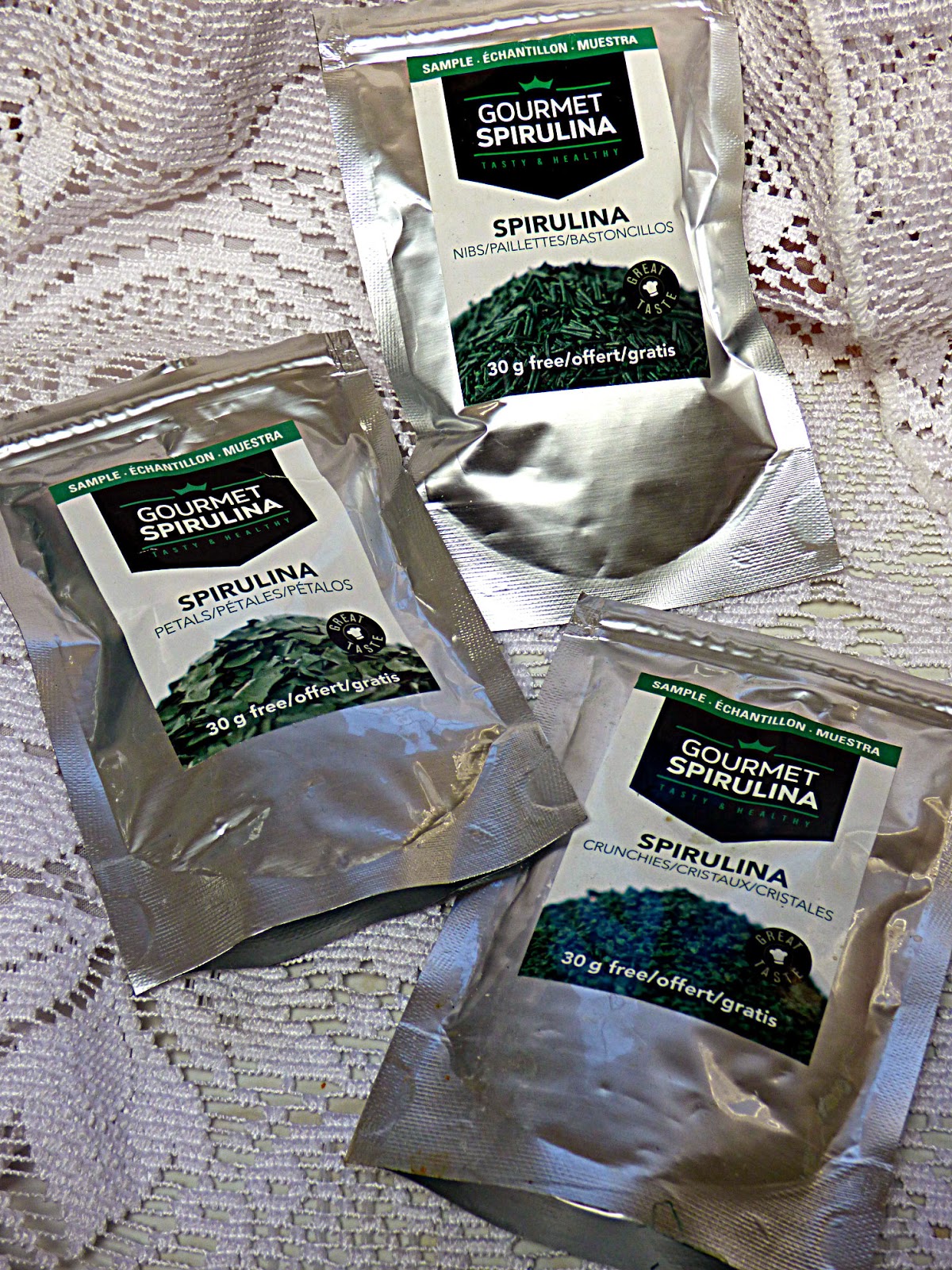
I'm always happy to try and test new foods, and was very curious to discover this nutrient rich superfood for myself. I received three samples of Gourmet Spirulina for testing.


The Gourmet Spirulina range comes in 3 varieties: Crunchies, Nibs and Petals. All of them are equally rich in vitamins, iron and antioxidants. The difference between the three is in taste and texture, which depends on the drying method as well as the region where they are grown.

The first variety I have tried was Spirulina Crunchies. I followed the suggestion from an enclosed information leaflet and added it to some homemade guacamole.

Gourmet Spirulina Crunchies
Like the name suggests, spirulina crunchies are exactly that, crunchy and crisp. I mixed a teaspoon into a guacamole made from one ripe avocado, lemon juice, avocado oil, salt, a dash of Tabasco and a clove of garlic. It was a nice range of textures from smooth guacamole to crispy spirulina pieces.


A few days later I tried Spirulina Petals in a beet dip. This variety of spirulina is more delicate. It resembles crushed green flower petals.

Gourmet Spirulina Petals
For a beet dip, either roast a couple of beets in foil or cook in a steamer. Once cooked and cool, cut into chunks and blitz with a hand blender with 2tbsp of Greek style yogurt, sea salt and pepper, 1tbsp of lemon juice, 1tbsp of Tahnini paste and a crushed clove of garlic. Mix in 1tsp of spirulina or scatter over the top.


The third variety - Spirulina Nibs - was used in a kefir smoothie. This is the mildest tasting spirulina with a slightly nutty flavour. They reminded me of the dried pine needles.

Gourmet Spirulina Nibs
Whizz together half a banana, a handful of blueberries, 1/2tsp of spirulina nibs and 2/3 of a standard sized glass of kefir.


As you can see, since there are three varieties, you might want to try them all to find out which one suits you better texture- and flavour-wise.
I cannot say that its taste is very exciting on its own, but mixed into the other foods, it just adds a subtle flavour. I think my favourite way was to have it in a smoothie.

Gourmet Spirulina Nibs, Petals and Crunchies all retail at £13 for 90g and are available online from Pulpastore and health food stores.


You might add it to almost any food you want - porridge, salad, granola, even on toast.
I don't have an iron deficiency so cannot say for sure if it made a big difference.
My only problem was that the Spirulina did make my tummy rumble quite a bit, so perhaps don't take it on a day when you have to be in a genteel society, as that might be awkward.

Have you tried Spirulina? What is your favourite way of eating it?


Disclosure: I received three samples of Spirulina for the purposes of testing and reviewing. All opinions are mine.

Wednesday, 4 September 2013

Okroshka, Russian cold soup

To celebrate the end of the summer, a few days ago I have decided to prepare a Russian cold soup called okroshka. Traditionally there are 2 main versions of this cold soup: one is made with kvas (a fermented bread drink, mildly alcoholic) and another one, made with kefir.
It is a refreshing soup, very easy to make and perfect for a lazy lunch on the dacha or in the garden. I haven't tried to make my own kvas, so this is a kefir-based version of okroshka.


Okroshka with kefir
Ingredients:
kefir (tub of 380g)
3 hard-boiled eggs
4 medium potatoes, diced
1 big cucumber, diced (or several mini-cucumbers)
a handful of radishes (about 8), sliced
4tbsp dill, finely chopped
4 spring onions, finely chopped
150g cold ham (like honey roast ham), cubed
salt


To my delight I have discovered that Tesco sells kefir. It is by a Polish brand Bakoma, and comes in a big plastic tub. Tastes identical to the Russian kefir. Last time I bought 3 of them, and they were gone in a couple of days, it is a lovely drink. If you haven't tried it, it tastes like a drinking yogurt. Imagine the Greek style yogurt diluted with water to the runny consistency.


Chopped and diced ingredients for okroshka


Boil potatoes until cooked, for about 20 minutes, don't overcook them, they shouldn't get mushy. Cool them. Dice the cold potatoes. Cook the eggs, they have to be hard boiled, and once cold, dice them as well.
Cube the ham. Some Russians use the boiled beef for this soup (the beef has to cool in broth or it might taste too dry). Some use the sausage like bologna.
Slice and dice all the veg and herbs.
Mix all the ingredients well in a big bowl. Season with salt.
Some cooks prefer to prepare the kefir in advance by stirring in the chopped dill and spring onions and leaving it to infuse for at least an hour or even overnight. I prefer to add the greens to the salad mix, and pour the slightly diluted kefir straight into each bowl.
As kefir is a bit thick in consistency add a bit of cold water to dilute it, just to make it less yogurty.


The ratio of kefir to the mixed veg is a bit like pouring milk over the cereals, i.e. it is not very liquid, but more substantial, maybe 2/3 of veg mix to 1/3 of kefir.


For a vegetarian version, skip the ham. I have also read that some people add the carrots to the soup, but that's not how I make it, and I don't like the sound of carrots added here.